Imagine slipping into a perfectly heated pool while a winter storm rages outside. An indoor swimming pool is the ultimate expression of luxury, offering year-round recreation, fitness, and a private space right inside a home or commercial property.
However, bringing this dream to life requires careful planning. Building an indoor aquatic space goes far beyond digging a hole and filling it with water; it involves complex environmental controls and, most importantly, selecting the right surfacing materials. In this article, we will explore the essentials of indoor swimming pool design, with a special focus on selecting the perfect swimming pool tiles to ensure your project is both breathtaking and built to last.
The Basics of Indoor Pool Construction
Before diving into the aesthetics of pool tiles, it is crucial to understand the unique structural requirements of an indoor pool room. Unlike outdoor pools, indoor pool environments must manage the humidity and chemical odors in an enclosed space.
- Climate Control is Key: You cannot simply build walls around a pool and call it a day. A high-capacity dehumidifier for indoor swimming pool environments is mandatory. This HVAC equipment prevents condensation from destroying your walls, ceiling, and structural framing.
- Defining the Space: Your indoor swimming pool design should reflect your lifestyle. Are you building a sleek, geometric lap pool for daily exercise? Or perhaps a family-friendly indoor swimming pool with slides, waterfalls, and a built-in spa? The intended use will heavily influence the material choices.
Once the structural and environmental controls are constructed, the most critical decision awaits: choosing the surface that will line your pool and surrounding decks.
Types of Pool Tiles for Your Indoor Sanctuary
While plaster or vinyl might suffice for basic outdoor pools, an indoor pool demands premium materials. Swimming pool tiles are not just about aesthetics; they offer unmatched durability, hygiene, and chemical resistance. At Keratiles Ceramic, we know that the right tile transforms a standard basin into a masterpiece.
Here is a breakdown of the primary types of decoration tiles used in indoor aquatic spaces:
1. Porcelain Tile: The Durable Classic
When it comes to longevity and structural integrity, porcelain tile is the material of choice. Fired at incredibly high temperatures, porcelain is dense with an extremely low water absorption rate, making it virtually impervious to water.
- Benefits: It easily withstands the constant exposure to pool chemicals and fluctuating indoor temperatures. Porcelain is also highly resistant to scratching and staining.
- Best Uses: Ideal for the entire pool basin, the waterline, and slip-resistant textured variations are excellent for the surrounding pool deck.
2. Mosaic Tiles: Artistry in Every Piece
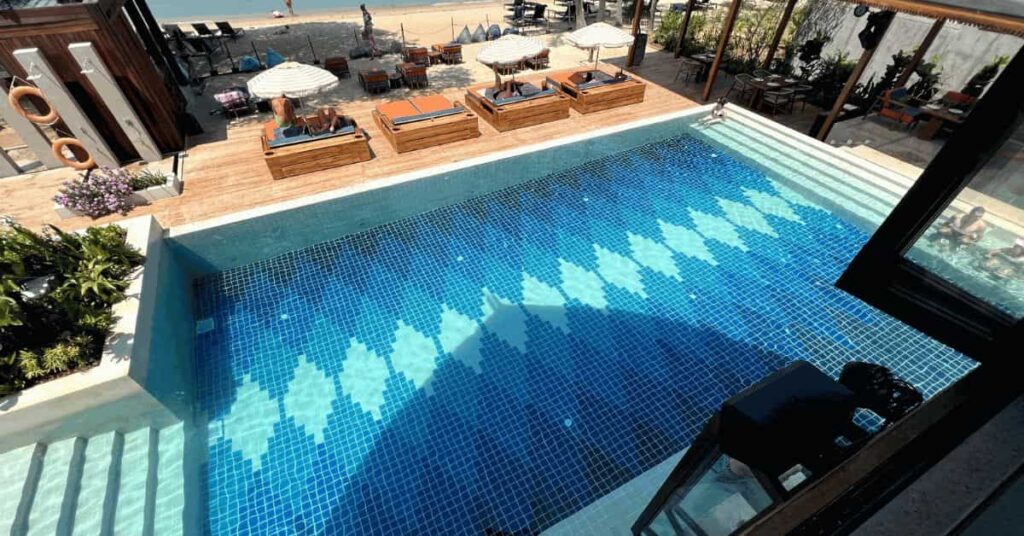
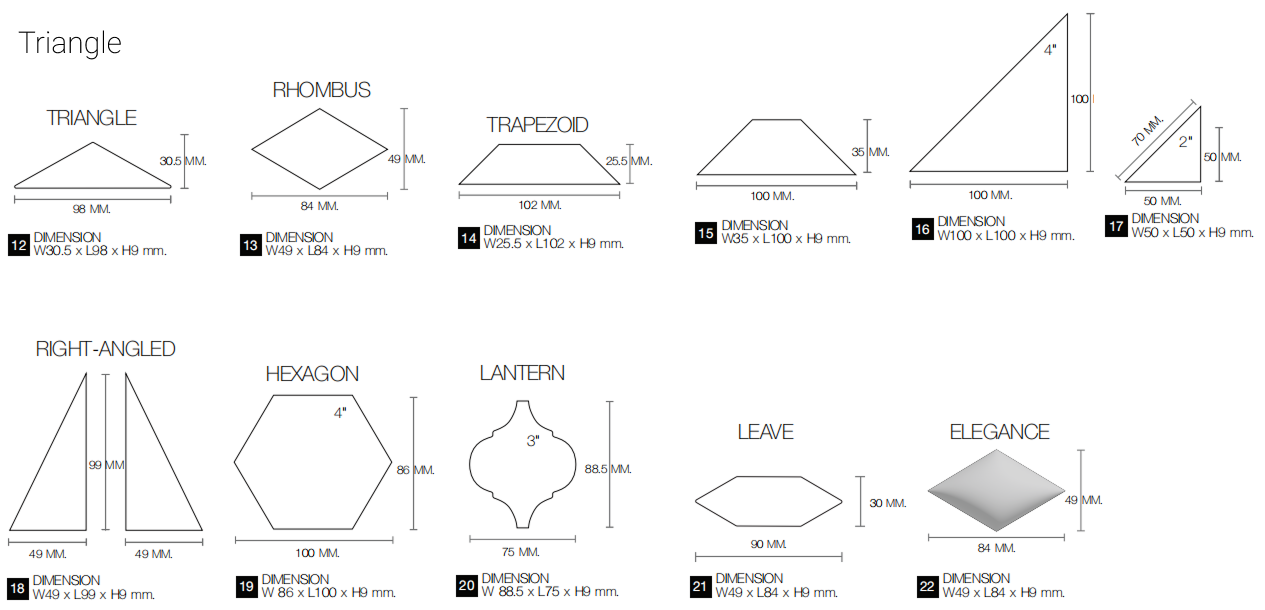
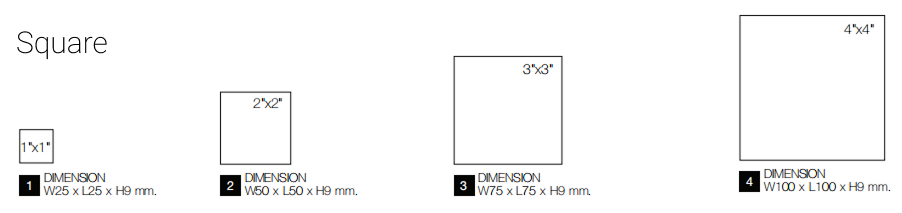
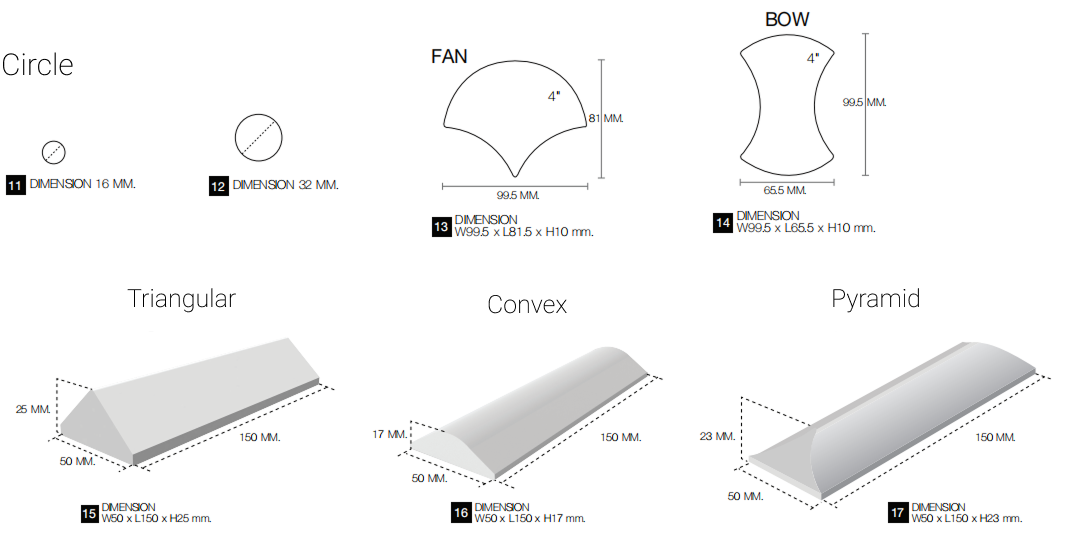
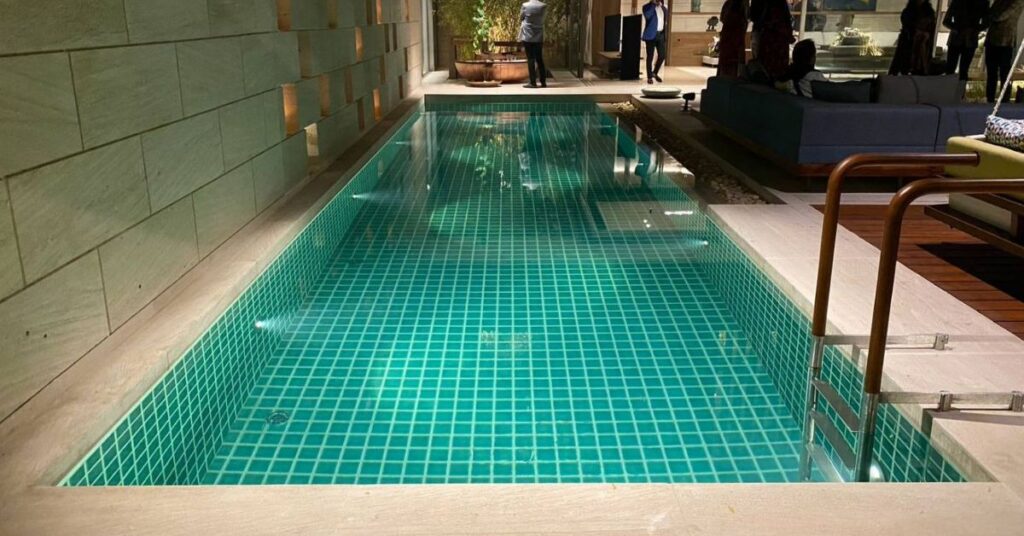
Mosaic tiles consist of small pieces (usually 1×1 or 2×2 inches) mounted on mesh or paper-backed sheets, offering customization ability. You can creatively design your mosaic tiles into colorful gradients, creative murals, or any other artworks that go together with an indoor swimming pool design.
- Benefits: Because of their small size, mosaics can easily wrap around curved pool steps, rounded seating areas, and spas. The high concentration of grout lines also provides excellent natural slip resistance.
- Best Uses: Creating intricate underwater murals, gradients, and wrapping complex architectural features.
3. Natural Stone Tiles: Organic Elegance
To truly ground your indoor swimming pool design in nature, consider using natural stone such as travertine, limestone, or slate.
- The Benefits: Natural stone provides a timeless, earthy aesthetic with inherent slip resistance. While they require periodic sealing to prevent moisture absorption, they bring an unparalleled level of spa-like luxury to any indoor oasis.
- Best Uses: Perfect for pool surrounds, coping, and creating stunning architectural feature walls.
Cost-Benefit Analysis: Tiling vs. Concrete Pool Surrounds
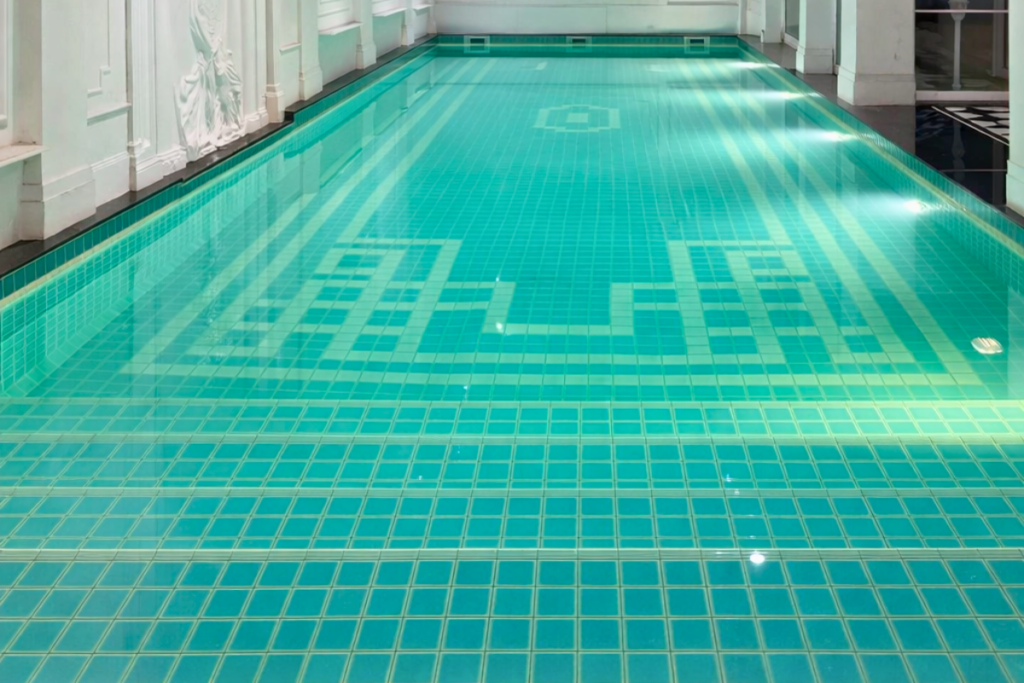
A common question during the design phase is whether to use concrete or tile for the pool surround (the deck area). While poured or stamped concrete might have a lower initial installation cost, tiling offers significant long-term advantages for indoor environments.
Durability and Maintenance: Bare concrete is porous and prone to cracking, staining, and moisture absorption—a major liability in a humid indoor room. Porcelain tiles, on the other hand, act as a waterproof barrier, protecting the subfloor.
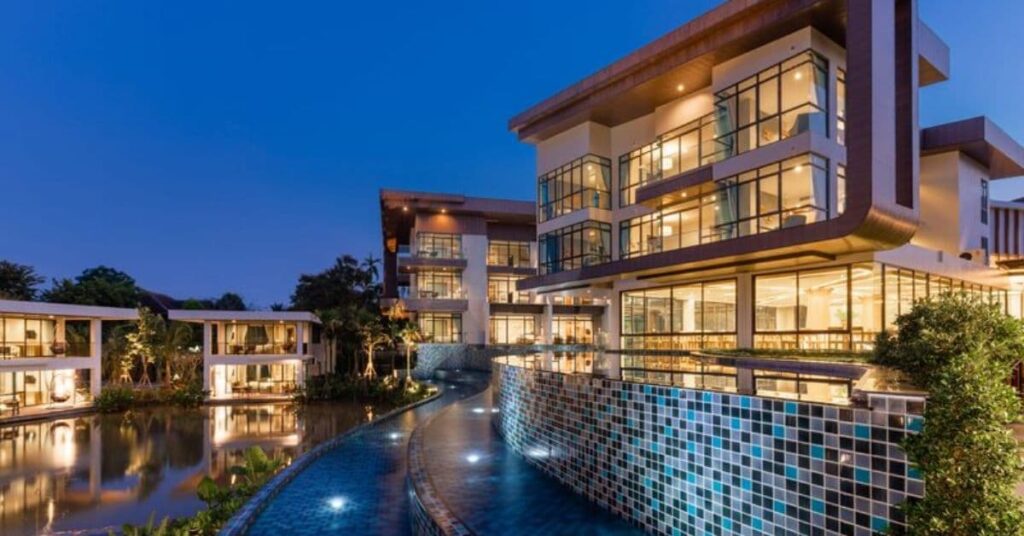
Aesthetics: Tiles offer a level of refinement that concrete simply cannot match. You can seamlessly transition your swimming pool tiles from the water directly onto the deck for a modern, cohesive look.
Beyond the Pool: Versatile Uses for Aquatic Tiles
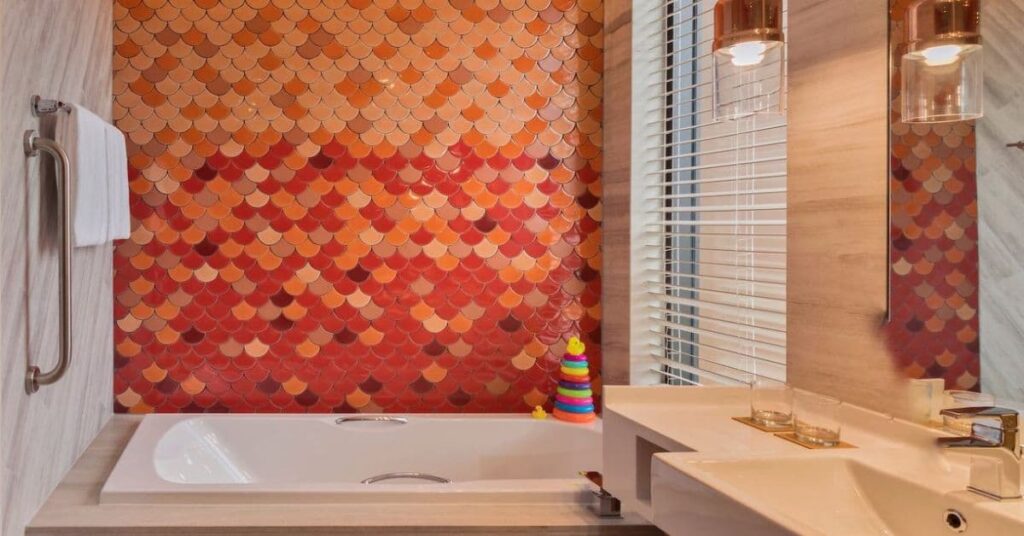
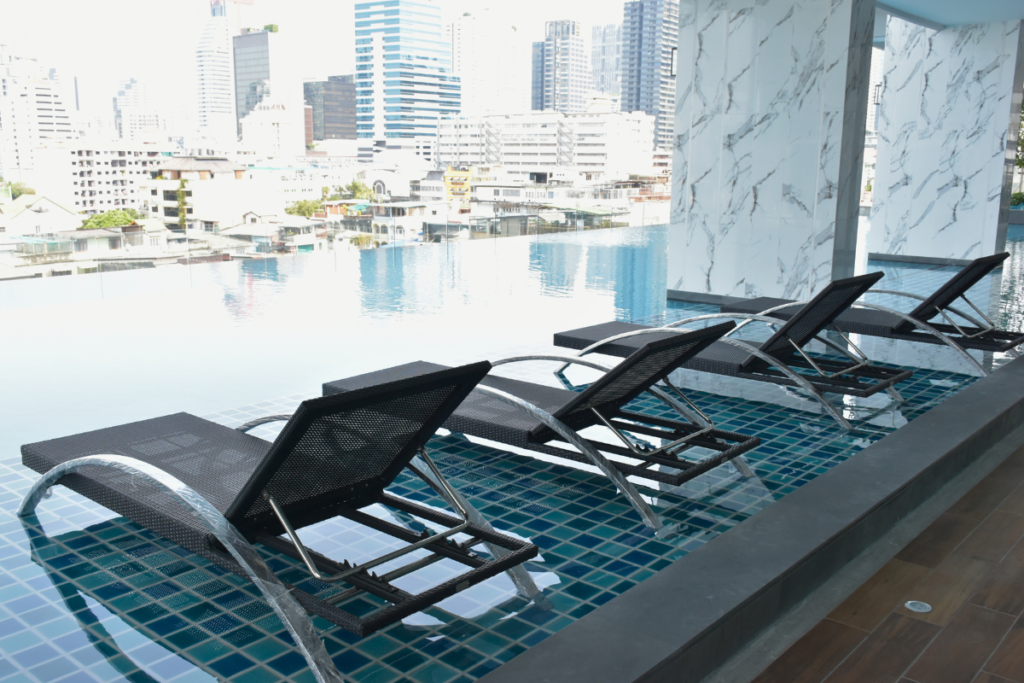
The beauty of high-quality pool tiles is that their application does not stop at the water’s edge. In an indoor environment, your tile design can be extended to unify the space, encompassing areas such as a spa and a jacuzzi, feature walls, indoor showers, and a changing room. This effectively creates a seamless, resort-like spa experience right in the property.
Maintaining Your Indoor Swimming Pool Tiles
An indoor pool is protected from leaves, UV fading, and freezing weather, making tile maintenance significantly easier than an outdoor pool. However, routine care is still necessary:
1. Monitor Chemical Balance: Keep your pH between 7.4 and 7.6. High pH leads to calcium scaling, which leaves a white, crusty residue on your beautiful tiles.
2. Routine Brushing: Brush your tiles weekly to disrupt any biofilm. Even in a climate-controlled indoor room, algae and bacteria can form if the water circulation is poor.
3. Grout Care: Ensure your contractor uses a high-quality, waterproof epoxy grout during installation. It resists chemical degradation and prevents leaks far better than traditional cementitious grout.
Building an indoor swimming pool is a complex but incredibly rewarding project. By investing in the right HVAC systems, like a high-quality dehumidifier, and, most importantly, prioritizing premium swimming pool tiles materials, you guarantee a space that is as structurally sound as it is beautiful.
Whether you are an architect drafting a luxury commercial spa or a homeowner designing a private retreat, Keratiles Ceramic is your trusted partner. As a leading manufacturer of premium tiling solutions, we offer an extensive portfolio of porcelain tile, beautiful mosaics, unique celadon tiles and other decoration tiles engineered for the demanding environments of swimming pools.
Keratiles Ceramic: Thailand’s Premium Swimming Pool and Decorative Tiles
Keratiles Ceramic Co., Ltd. has been Thailand’s premier ceramic tile manufacturer since 2004, specializing in premium swimming pool and decorative tiles. Our ISO 9001-certified and Thailand Trust Mark-recognized KERADOL brand tiles feature distinctive crackle finishes and over 200 color variations. Trusted by customers across 30+ countries globally, we provide comprehensive export services, technical support, and custom design capabilities.
Contact us:
- Email: info@keratiles.co.th
- Or visit: www.keratiles.com for more information.