When it comes to material for both residential and commercial spaces, “porcelain tile” stands out as a premier choice among architects and designers. Due to its durability, low water absorption, and sophisticated aesthetic, it is often the material of choice for everything from hotel lobbies and commercial kitchens to backyards and swimming pools. However, choosing and installing these beautiful decoration tiles is only the first step.
To ensure your porcelain tile retains its pristine condition, safety, and structural integrity, understanding the correct maintenance procedures is essential. Today, we’ll dive into how to clean porcelain tiles effectively, ensuring your surfaces remain as breathtaking as the day they were installed.
Understanding the Material: Porcelain Tile
Before diving into the specifics of cleaning protocols, it is crucial to understand the unique properties of the material you are working with.
So, “what is porcelain tile” exactly? While it falls under the broader category of ceramics, it is distinct in its composition and manufacturing. Porcelain tile is made from a refined mixture of kaolin clay, feldspar, and quartz, which is then fired at significantly higher temperatures—often exceeding 1,200 degrees Celsius. This intense firing process, known as vitrification, results in a tile that is denser, harder, and far less porous than standard ceramic.
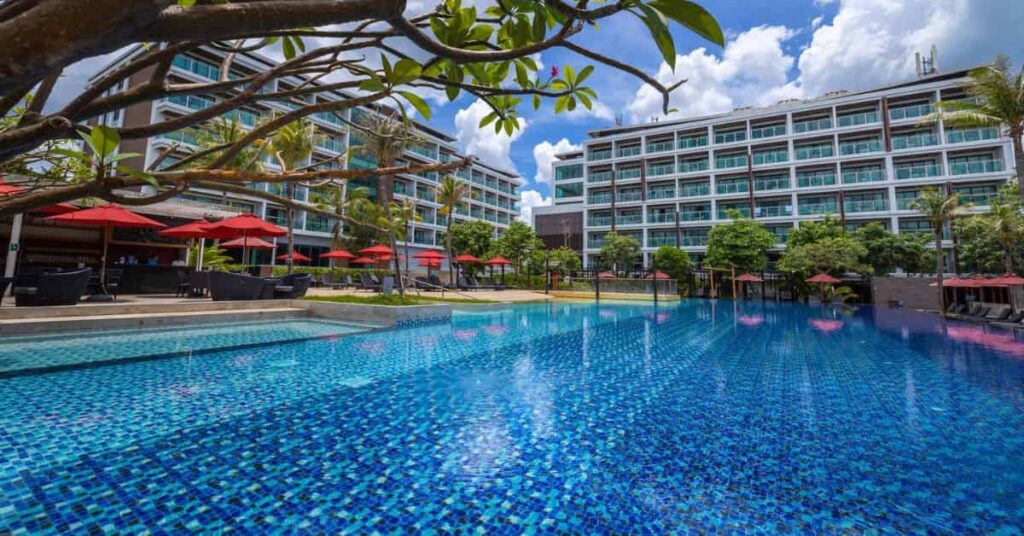
In fact, to be recognized as porcelain, a tile must have a water absorption rate of 0.5% or less. This particular attribute makes it incredibly resistant to frost, moisture, and deep-set staining, which is why it is often the choice for outdoor applications and is used as swimming pool tiles. Unlike softer stones that can absorb contaminants, porcelain acts as a barrier, keeping hygiene high and maintenance relatively low.
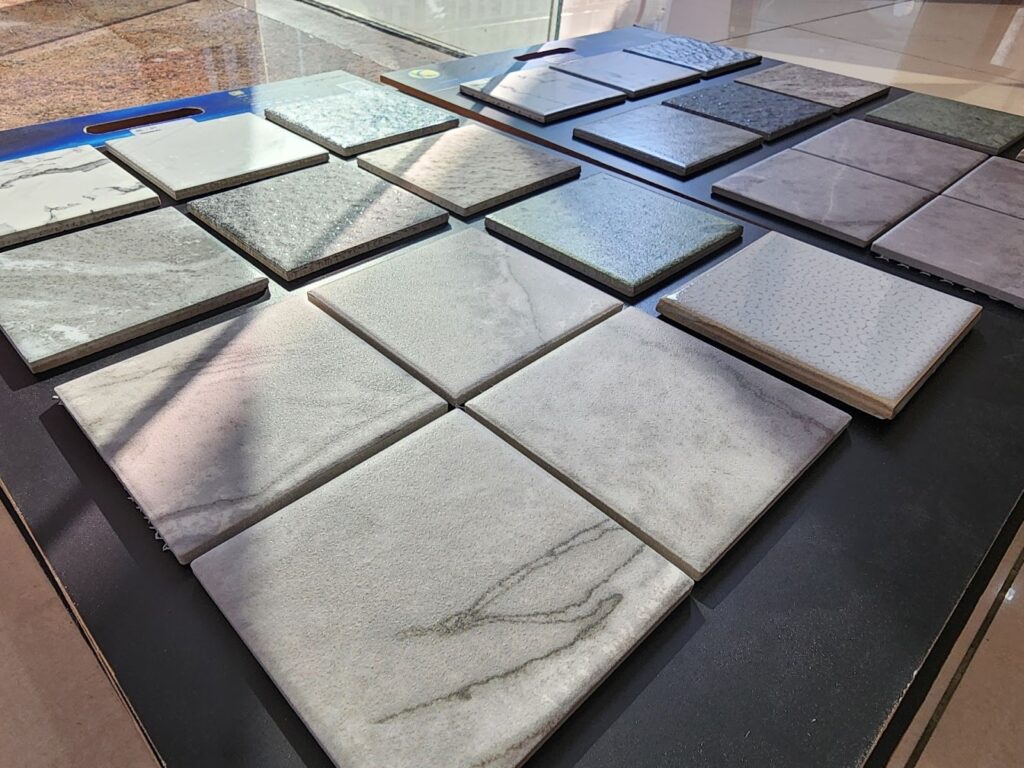
To help you better understand the options available, here are the common types of porcelain tile:
- Unglazed (Through-Body) Porcelain: A well-known type of porcelain tile. The color runs through the entire thickness of the tile, making scratches or chips almost invisible. It offers excellent slip resistance, making it ideal for high-traffic areas or for use as pool tiles.
- Glazed Porcelain: Features a protective coating of liquid glass (glaze) that is fired onto the surface. This allows for diverse colors, patterns, and designs, including a realistic wood or stone appearance, making it ideal for residential flooring and walls.
- Polished Porcelain: An unglazed tile that has been ground down and buffed to a high shine, mirror-like finish. While stunningly elegant for floor and wall decoration, it can be slightly porous compared to other types and may require sealing to prevent staining.
- Textured (Structured) Porcelain: Manufactured with a rough or tactile surface mimicking natural materials like stone or wood, while also providing maximum grip. This type of porcelain is often used for areas like pool decks, bathroom floors, outdoor patios, and moisture-prone areas to ensure safety.
How to Clean Porcelain Tile: A Step-by-Step Maintenance
While porcelain tiles are durable, they are not invincible. Dirt, sand, and grit act like sandpaper; when left on the floor, foot traffic grinds these abrasive particles into the surface, which can cause micro-scratches and dullness over time.
Here is a step-by-step approach on how to clean porcelain tile floors to maintain their elegance:
Step 1: Daily Dust & Debris Removal
Sweep or vacuum the area regularly to remove loose dust, pet hair, and abrasive grit. If you are using a vacuum cleaner, be sure to use a soft brush attachment on the porcelain. Metal or hard plastic beater bars can strike the tile surface repeatedly, potentially scratching the finish or chipping the edges of the grout.
For expansive outdoor areas paved with porcelain decoration tiles, using a leaf blower or a stiff-bristle outdoor broom can effectively clear away leaves, soil, and organic matter that might otherwise decay and stain the grout.
Step 2: Mopping: Using the Two-Bucket Method
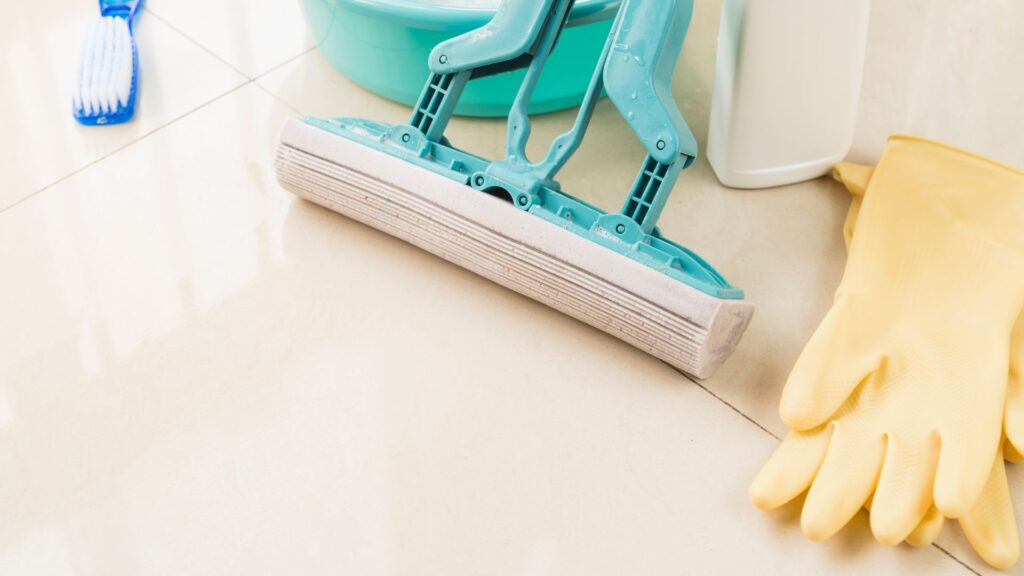
For routine washing, plain clean water is often sufficient to keep any porcelain tile looking fresh. However, the technique matters significantly. We highly recommend the “two-bucket method”: one bucket for cleaning solution and a separate bucket for rinsing your mop. This prevents you from reapplying dirty water back onto the surface.
Use a microfiber mop or a soft cotton rag rather than a sponge mop. Sponge mops tend to push dirty water into the grout lines, causing them to darken and collect grime over time. Change your rinse water frequently, as dirty water will only redistribute soil and leave unsightly streaks behind.
Step 3: Using the Right Cleaning Solution
When water alone isn’t enough to cut through the grime, choosing the right cleaning agent is critical. We recommend using a mild, pH-neutral cleaning solution formulated specifically for tile and stone. These cleaners are chemically balanced to lift grime effectively without damaging the protective sealant on your grout or etching the glaze on the tile.
If you prefer a more natural or eco-friendly approach, a diluted mixture of white vinegar and warm water can be effective, particularly for unglazed tiles. However, use vinegar sparingly. While it is safe for the porcelain, excessive acidity can weaken cement-based grout over time. Most importantly, always avoid oil-based soaps, which are known to leave sticky residues.
Step 4: Rinsing the Porcelain Tile
One of the most overlooked steps when cleaning porcelain tiles is rinsing. If you use any type of detergent, soap, or chemical cleaner, you must rinse the tiles thoroughly with clean water afterwards. Detergent residue on the surface would create a sticky, invisible film that traps dust and dirt. This residue builds up over time, leading to a hazy porcelain tile that makes the surface look dirty even right after cleaning.
Step 5: Drying the Surface
To prevent water spots—especially on polished, high-gloss porcelain tile—dry the surface with a clean microfiber cloth or towel immediately after rinsing. This is particularly important in areas with hard water, where mineral deposits (calcium and magnesium) can leave unsightly white marks or “scale” as the water evaporates. Furthermore, drying the floor improves safety by removing slippery wet spots, preventing accidents.
Tips for Deep Cleaning & Stain Removal
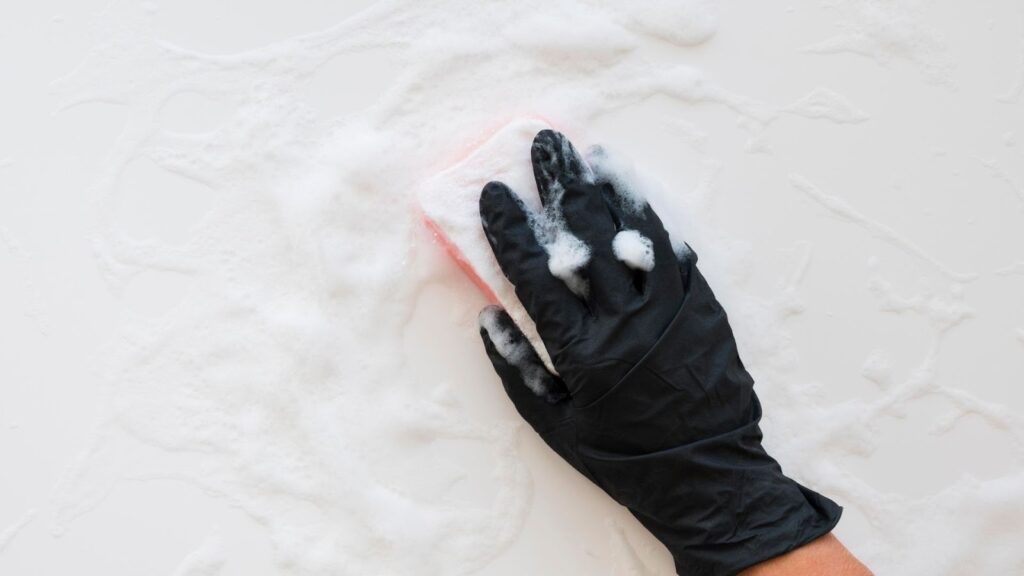
Even with routine care, accidents can happen, and stubborn stains might occur. Knowing how to address specific contaminants is vital for maintaining the porcelain’s integrity without causing damage.
- Grease and Oil: For kitchens or outdoor BBQ areas, grease can be stubborn. An alkaline-based cleaner or a specialized degreaser is best suited to remove grease and oily residues. Allow the cleaner to dwell for a few minutes to break down the oils before scrubbing.
- Ink, Dye, or Marker: In office spaces, children’s playrooms, or areas that ink stains may occur. A solvent-based cleaner or rubbing alcohol is usually required to lift these pigments off the surface.
- Hard Water and Rust: In bathrooms or pool decks, you may encounter mineral deposits or rust. A mild acidic cleaner (specifically designed for tile) can dissolve these deposits. However, use acidic cleaners with extreme caution. Always pre-wet the grout with water before applying acid to prevent it from eating into the cementitious grout material, and rinse immediately and thoroughly.
- Making Porcelain Tile Shine Again: Over time, you might notice polished tiles losing their luster. A simple solution for how to make porcelain tile shine again is by using a mix of white vinegar and water (approximately 1/4 cup of vinegar to 1 gallon of water). Mop the floor with this solution, allow it to dwell for a few minutes (but do not let it dry). Then, scrub gently with a soft nylon brush and buff the floor dry with a soft cloth or microfiber mop. This process restores the natural reflectivity of the glaze without adding artificial waxes
The Do’s and Don’ts of Porcelain Care
To ensure the longevity of your flooring, strictly adhering to these best practices is recommended:
| What to DO | What to NOT DO |
| Do clean up spills immediately. While porcelain tile is stain-resistant, grout is often not. Acidic spills like wine, coffee, tomato sauce, or fruit juice can stain grout if left to sit and penetrate the porous surface. | Don’t use steel wool, scouring pads, or other abrasive materials. These can leave micro-scratches on polished surfaces that dull the shine over time. |
| Do test any cleaning product in an inconspicuous area (such as a corner, inside a closet, or under furniture) before applying it to the entire floor to ensure it does not affect the color or finish. | Don’t use cleaning products containing ammonia or bleach for routine cleaning. These harsh chemicals can discolor the grout and, over time, degrade the surface glaze. |
| Do place high-quality doormats at entryways. This simple step captures a significant amount of dirt and grit before it ever reaches your floors. | Don’t use oil-based detergents, wax-based cleaners, or oil soaps. These products leave a waxy residue that captures dirt, making the floor look dirty faster and making it difficult to remove without professional stripping. |
Maintaining porcelain tile is straightforward when you follow the correct procedures. By sticking to a routine of sweeping, mopping with neutral cleaners, and avoiding harsh abrasives, your surfaces will retain their beauty and functionality for years to come. It is a low-maintenance material that rewards simple, consistent care. Whether you are managing a commercial facility or caring for your private residence, these tips will ensure your investment remains solid and stylish.
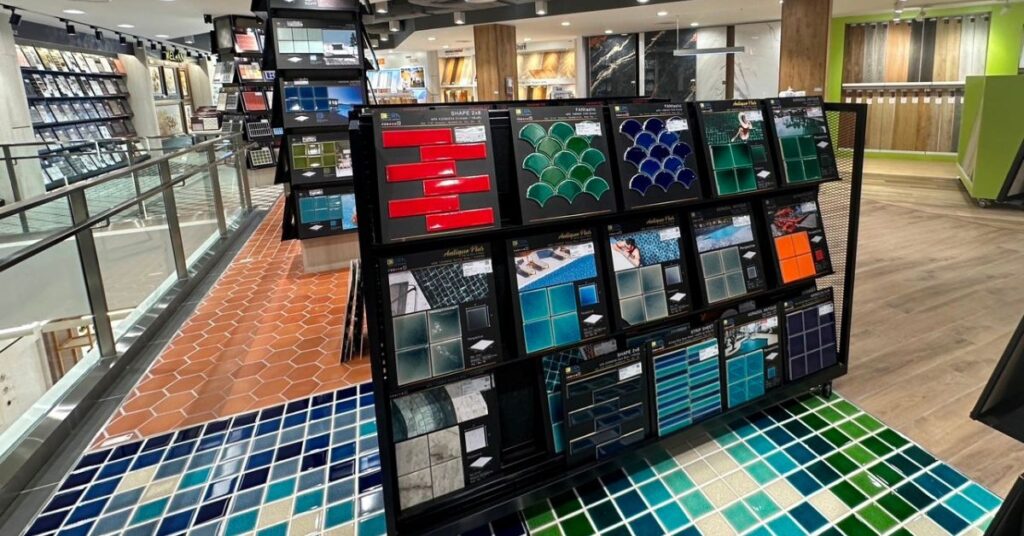
For those seeking premium tiling solutions, Keratile Ceramic stands ready to assist. Ranging from the signature Celadon tiles, New Keradol, Keradol Antique, Mononcolour, and Pastel to porcelain tiles for swimming pools, KERACOTTA & KRANITO floor tiles. Our extensive product range and commitment to quality make us a trusted partner for projects worldwide.
Keratile Ceramic: Thailand’s Premium Swimming Pool and Decorative Tiles
Keratile Ceramic Co., Ltd. has been Thailand’s premier ceramic tile manufacturer since 2004, specializing in premium swimming pool and decorative tiles. Our ISO 9001-certified and Thailand Trust Mark-recognized KERADOL brand tiles feature distinctive crackle finishes and over 200 color variations. Trusted by customers across 30+ countries globally, we provide comprehensive export services, technical support, and custom design capabilities.
Contact us:
- Email: info@keratiles.co.th
- Or visit: www.keratiles.com for more information.